










Setting the Standard
Setting The Standard For Fire Protection Systems: Contact Us Today!
For information about our electric/hybrid vehicle fire suppression systems click here. To find out how we can help you get in touch today or call us on 0800 975 5767.

Battery Safety Hazards
Mitigating Fire Hazards in Battery Energy Storage
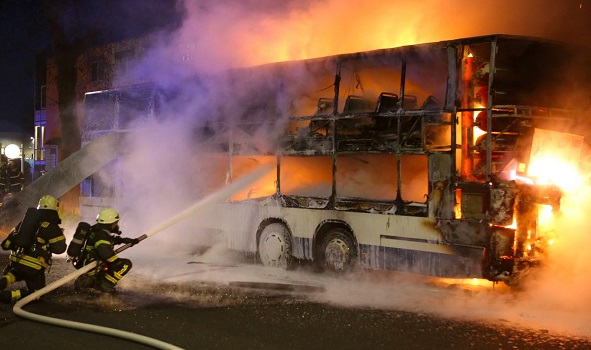
Batteries serve a single purpose: to store energy. The larger the battery, the more energy is stored. So when a cell in the battery fails or becomes damaged, there is a risk that the energy inside that cell will be discharged in an uncontrolled way and the battery will ignite.
In a lithium-ion battery, if the failure of a cell causes the temperature inside the battery to rise, the materials within can begin to decompose. This process is exothermic, which in turn increases the temperature further, creating a positive feedback loop with a steep growth curve.
Without immediate protective action, thermal runaway can occur. The temperature continues to grow exponentially, the battery becomes unstable, and the energy within is discharged to the surrounding environment without control, causing the battery to light on fire.
Early Detection
Stopping Lithium-Ion Fires Before They Ignite
Combined with the flammable electrolytes used in lithium-ion batteries, thermal runaway can lead to intense fires that take a long time to fully extinguish. The ignited battery provides its own oxygen, making it impossible to starve the flames: the fuel, oxygen and source of ignition all come from within. Despite this, BESS offers some benefits over traditional fuel tanks in terms of safety.
With prompt action, it is possible to prevent the battery from igniting at all, even if it is damaged or begins to fail. Before the flames are lit, there is often more time to act with a damaged battery, than there is with conventional fuels that have been exposed to a source of ignition.
But in order to benefit from this window of opportunity, the battery must be monitored and protected using a system that responds quickly when a damaged cell or rising temperature is detected. It is critical to suppress fire and high temperatures before thermal runaway can begin.
Resources
Find the right
protection system
Every operation has different demands. Our free guide walks you through the essentials of fire detection and suppression, helping you make the right choice for your facility.


get a quote
Request a Quote
Speak to our fire protection specialists about your requirements.
"*" indicates required fields